Succotash Recipe
Fresh Succotash Recipe
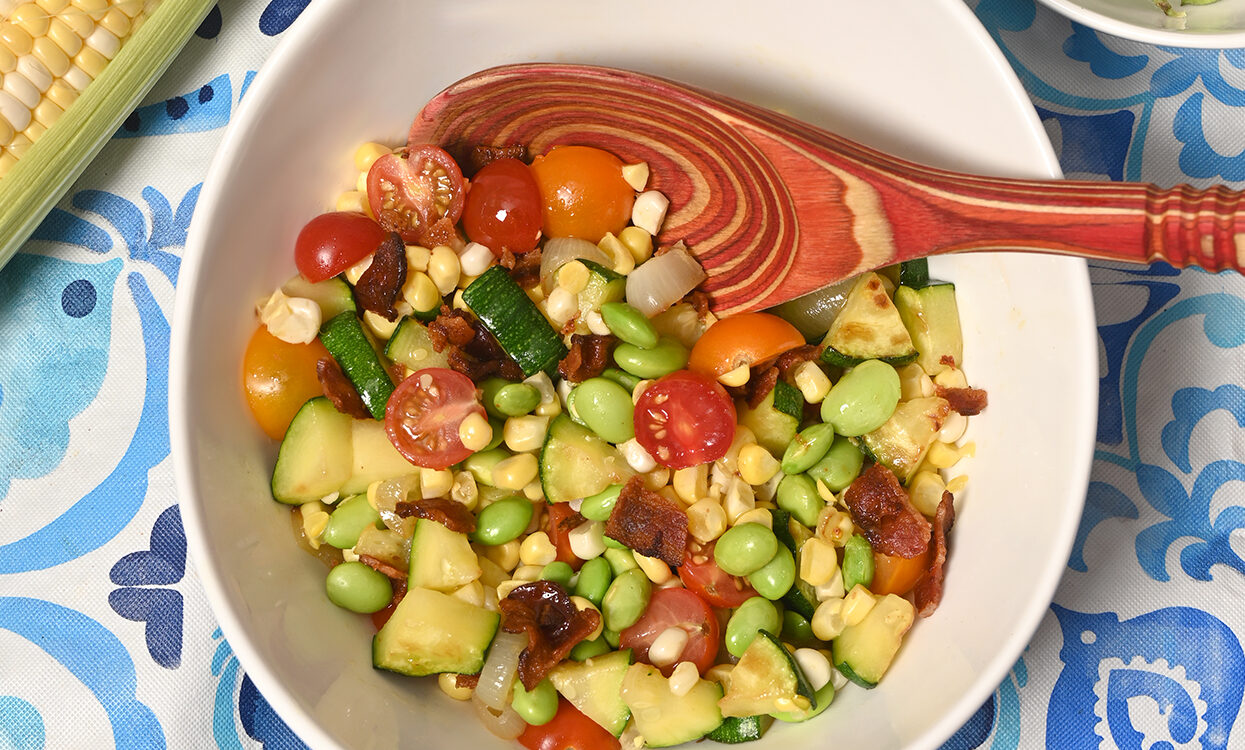
It is the height of summer, and the garden vegetables are ripening in abundance. As I scour the internet for new recipes to try, I recently rediscovered a classic dish that I had never considered making—succotash.
The word succotash used to bring up images in my mind of mushy, overcooked vegetables languishing on the dinner table because no one wanted to eat them. I decided to create my own fresh take on this traditional dish, and it has quickly become my favorite recipe of the month. I think you’ll enjoy it, too.
My Childhood Memories of Succotash
Growing up in the eastern United States during the 1960s, frozen vegetables were king in our household. My family didn’t care for canned vegetables, so frozen seemed like the better option. There was this particular bag mix of peas, carrots, green beans and lima beans that I reviled. While not succotash per se, it was our household version of it. like many children, I had an aversion to vegetables that were mealy or rubbery.
There was little effort to enhance the flavor of those frozen vegetables, and my mom usually cooked them until they were very soft and mealy. To my young palate, they were completely unappealing. The biggest offender was the lima bean. Many evenings I sat at the kitchen table long after everyone else had finished dinner, staring at the small pile of lima beans on my plate and refusing to eat them. I usually won the battle but had to sit at the table until dark.
The History of Succotash
Succotash has its roots in the cooking traditions of Indigenous peoples of North America. The word succotash comes from the Narragansett word msíckquatash, meaning “broken” or “boiled corn kernels.” The dish originally combined corn and beans, two crops that were often grown together. Over time, squash became a common addition because it was part of the traditional “Three Sisters” planting method, in which corn, beans, and squash supported one another while growing in the garden.
The three sisters of the garden
The basic concept of the three sisters is one of companion planting. The corn provides a natural trellis for the beans to climb. The beans add nitrogen to the soil, helping feed all three crops. The broad squash leaves shade the ground, helping retain moisture and suppress weeds. Since these vegetables were harvested together, they naturally found their way into the same dishes.
Regional Variations
Early versions of the dish were first documented in New England, but variations spread throughout the United States. Today, many people associate succotash with Southern cooking.
Northern versions often include corn, beans, potatoes, onions, or turnips and are typically prepared as a hearty stew.
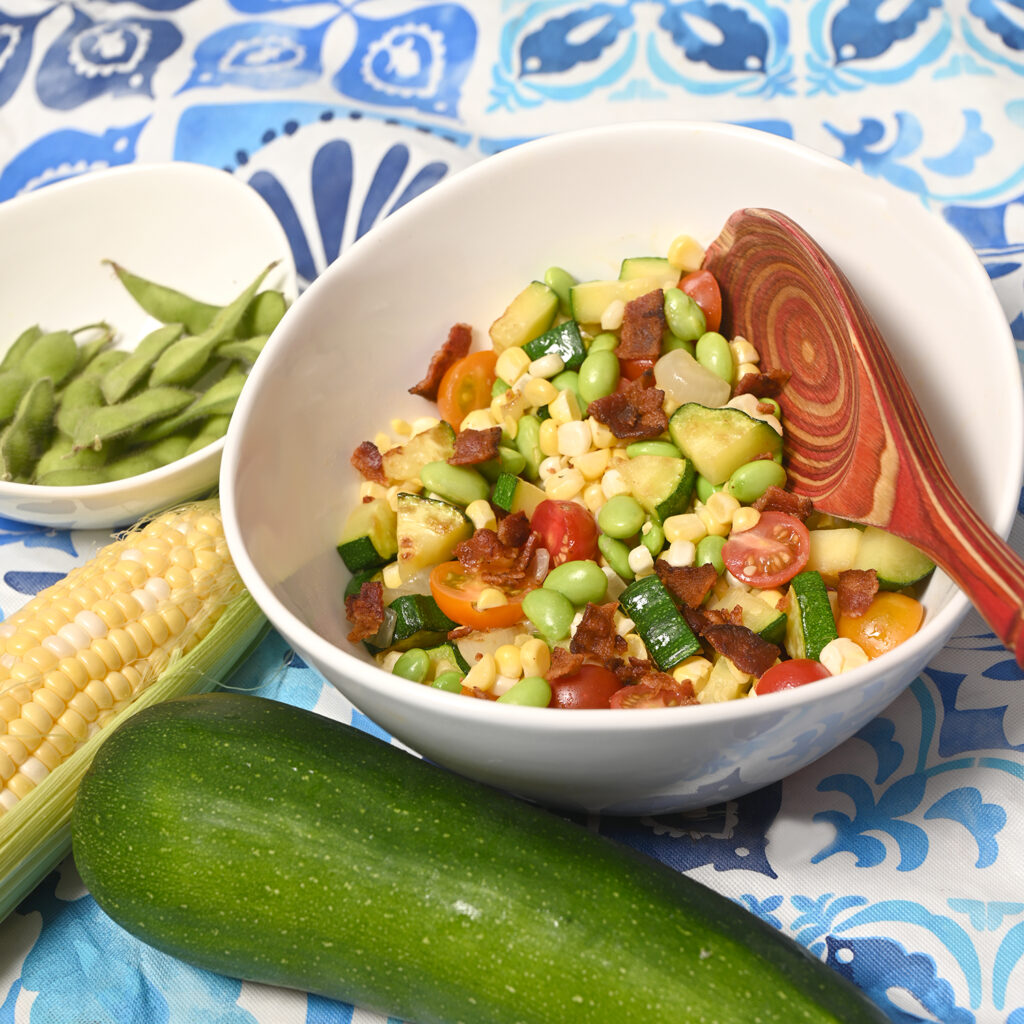
Southern versions usually feature corn, lima beans, squash, and sometimes tomatoes, okra, or bell peppers. Bacon or other pork products are often added, and the vegetables are sautéed in the pork fat rather than simmered into a stew.
My Modern Succotash
My version is inspired by the Southern style but with a few changes.
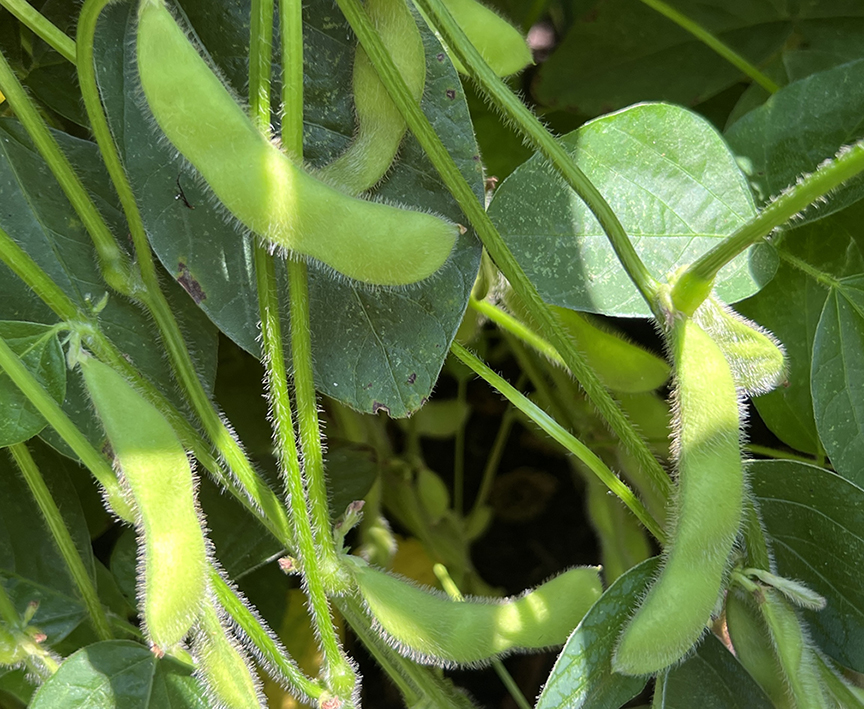
To this day, I still can’t bring myself to eat lima beans, so I substitute fresh edamame instead. Rather than using canned or frozen vegetables, I make this recipe with fresh, seasonal produce whenever possible. It has a brighter flavor, better texture, and celebrates everything that is wonderful about summer gardening.
I also make this version a little lighter. Instead of sauteing the vegetables in bacon fat, I cook them in olive oil and sprinkle crispy cooked bacon over the finished dish. You still get all the smoky bacon flavor without making it the primary cooking fat which is far less healthy than olive oil.
Corn
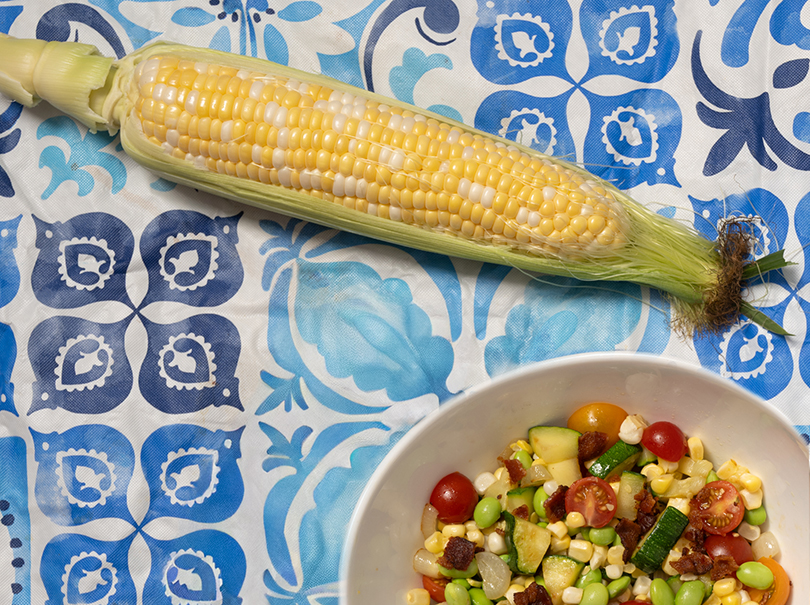
Fresh sweet corn is the star of this recipe. Nothing compares to the flavor of corn picked only a day or two earlier. Since I don’t have enough room to grow corn in my backyard, I buy mine from a local farm stand when it’s in season.
Many people don’t realize that fresh corn can be eaten raw. The sweet, juicy kernels are absolutely delicious straight off the cob. Because corn begins converting its natural sugars into starch soon after harvest, try to use it within five to seven days for the best flavor. I add the uncooked kernels to my sautéed vegetables once they are removed from the heat to lightly steam them, so they keep that fresh crisp raw flavor.
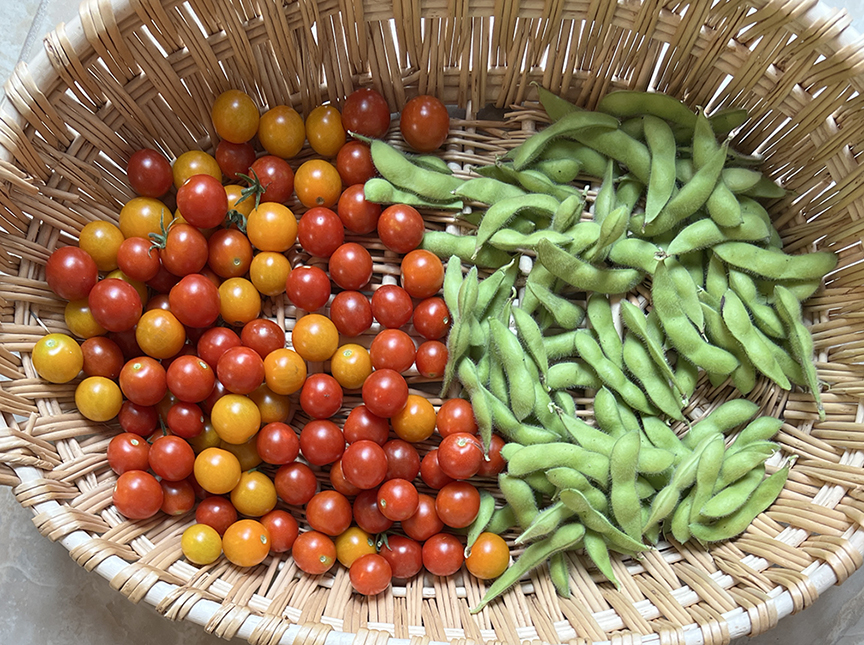
Edamame
Fresh edamame is easy to shell after a quick steam. I microwave the pods with a small amount of water for about one minute. Once they have cooled slightly, simply squeeze the beans from their pods. This method lightly steams the beans so they retain their bright green color and crunch. They are also tossed with the sauteed vegetables after they are removed from the stove.
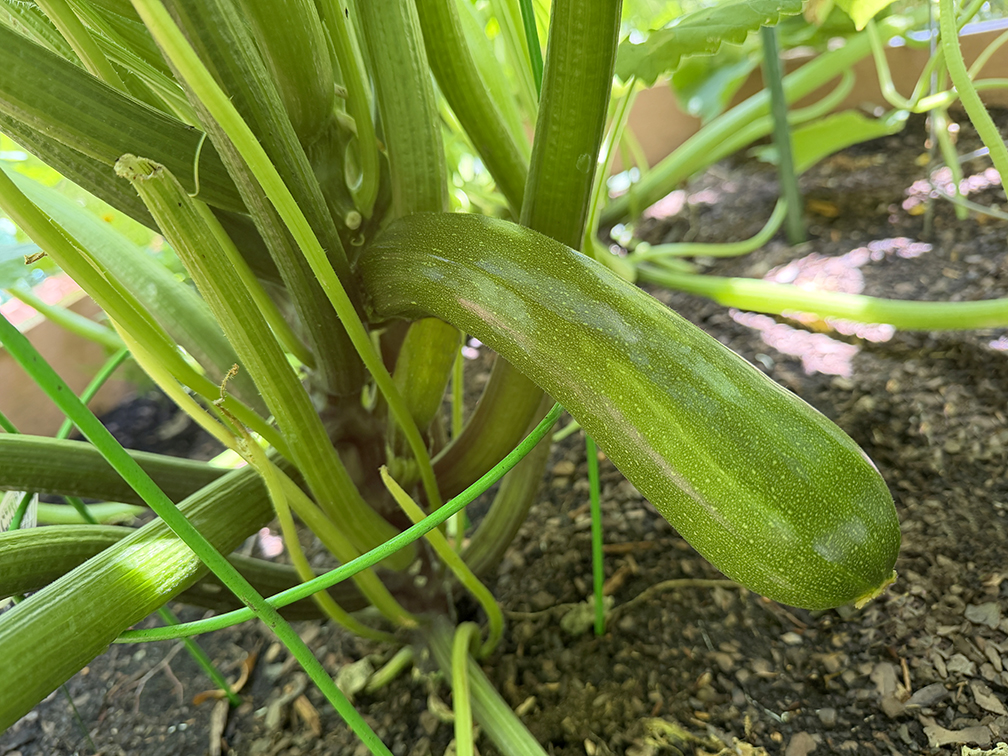
Summer Squash
Any summer squash works well in this recipe. I usually use zucchini, but yellow squash or patty pan squash are equally delicious. I prefer zucchini because its dark green skin provides a beautiful contrast to the bright yellow corn. Try to dice the pieces of squash small enough that they blend with the beans and corn in every delicious bite.
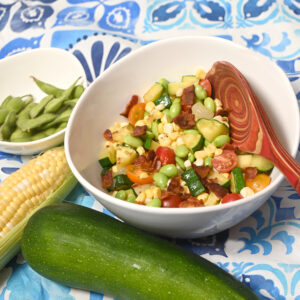
Fresh Succotash Recipe
Ingredients
- 1 TB olive oil
- 2 cups diced Zuccchini or summer squash
- 1/2 cup diced onion
- 2 Ears fresh corn, kernels removed from cob
- 2 cups shelled Edamame
- 1 cup halved cherry tomatoes
- 4 strips cooked bacon, broken into pieces
Instructions
- Sauté diced zucchini and onions until lightly browned in the olive oil
- Move the hot ingredients to a bowl and sprinkle with salt and pepper.
- Add edamame, corn, and tomatoes to the hot ingredients and mix well
- Top with crumbled bacon to serve.
Enjoy Your Summer Harvest
I hope this fresh take on succotash inspires you to make the most of your summer harvest. One of the best things about this recipe is its flexibility. Feel free to substitute vegetables based on what is ripe in your garden or available at your local farmers market.
If you make this recipe, I’d love to hear how you customized it. Leave a comment below and let me know what fresh vegetables you added to make it your own. Enjoy!