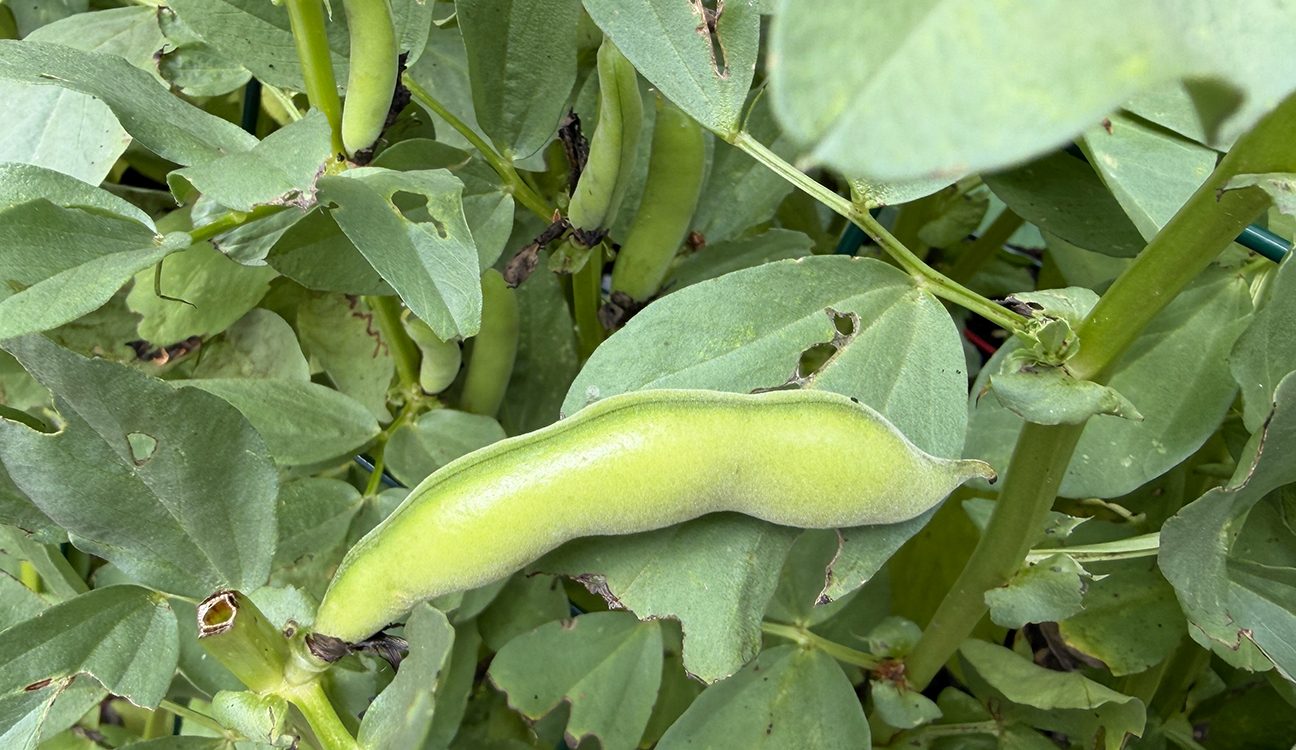
Fava beans growing
Fresh Fava Beans: A Spring Delicacy Worth Growing
Variety in the Home Garden
Fava beans are a great addition to a backyard garden. One of the greatest benefits of growing your own food is the opportunity to taste vegetables that are difficult—or even impossible—to find in the grocery store. That’s exactly what inspired my experiment with growing fava beans in my garden.
Are Legumes and Beans the Same Thing?
Let me start with a quick lesson about legumes. Many people use the words legumes and beans interchangeably, but they are not exactly the same thing. A legume is any plant in the family that produces seeds inside a pod. Beans, peas, lentils, peanuts, soybeans, and chickpeas are all legumes.
Beans are one type of legume. In other words, all beans are legumes, but not all legumes are beans.
Legume Family
- Beans – kidney beans, black beans, pinto beans, navy beans, fava beans, soybeans
- Peas – garden peas, snow peas, snap peas
- Lentils
- Chickpeas (garbanzo beans)
- Peanuts
What Are Fava Beans?
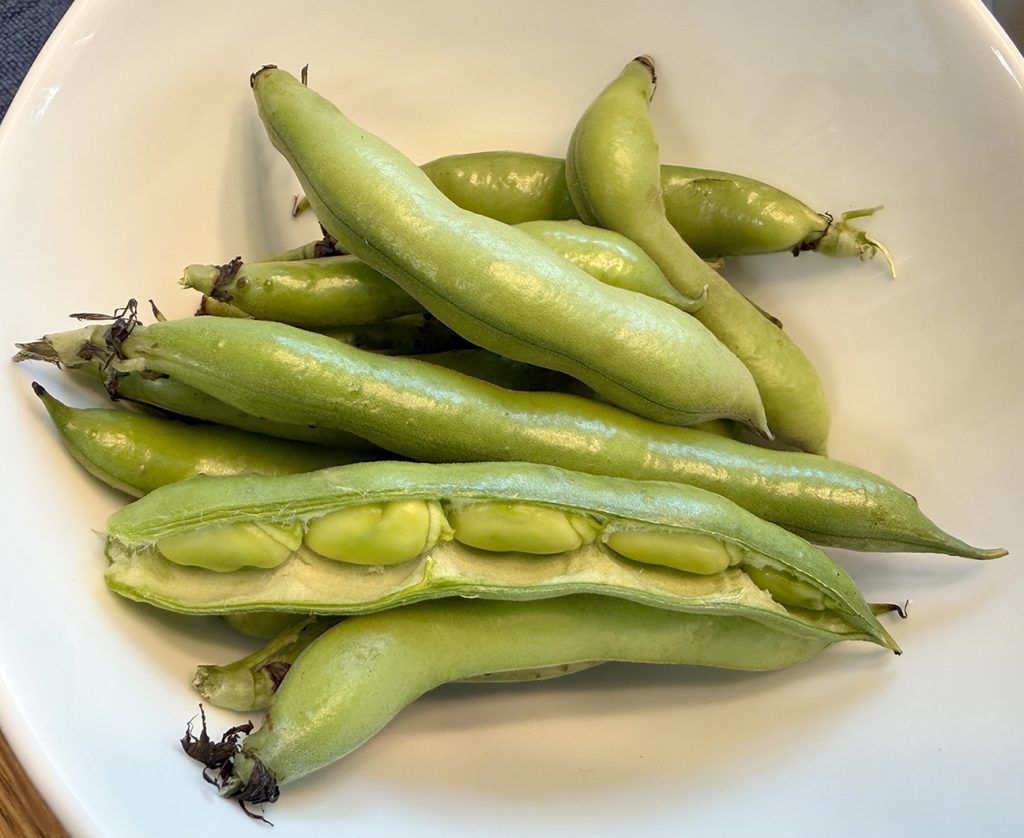
Fava beans (also called broad beans) are members of the legume family and are widely grown throughout the Mediterranean and the Middle East. Like peas, they thrive in cool weather (USDA hardiness zones 7-11 for early spring planting) and are one of the first crops ready to harvest in spring. Fava beans are unique because they can be eaten fresh, like peas, or allowed to mature and dry, when they are used like other dried beans.
At first glance, the pods resemble oversized green beans. But they are longer, thicker, and slightly fuzzy. Inside each pod are several large beans, each enclosed in its own thin outer skin.
Very young pods and tender inner skins are technically edible, but once the beans mature, both become tough. If you want to experience the sweet, buttery flavor that makes fresh fava beans so special, it’s well worth taking the extra time to remove both the outer pod and the thin skin surrounding each bean.
Why Fresh Fava Beans Are So Delicious
Fresh fava beans are completely different from the canned or dried versions found in most grocery stores. Their sweetness begins to disappear soon after harvest as the sugars naturally convert to starch. Like fresh shelling peas, they are at their peak for only a short window in late spring.
Every year I promise myself I’ll plant my peas a little earlier to enjoy a bigger and sweeter harvest. I usually don’t get them into the ground until mid-March, and this year I didn’t plant my fava beans until May. Next season, my goal is to have both peas and fava beans planted by March 1. With a growing time of about 50 to 60 days, that should have both crops ready to harvest by early May.
How to Grow Fava Beans
Fava beans are easy to grow from seed and typically germinate within 7 to 14 days.
A few growing tips:
- Plant seeds in early spring as soon as the soil can be worked.
- Grow them in full sun.
- Provide support as the plants become tall stalks.
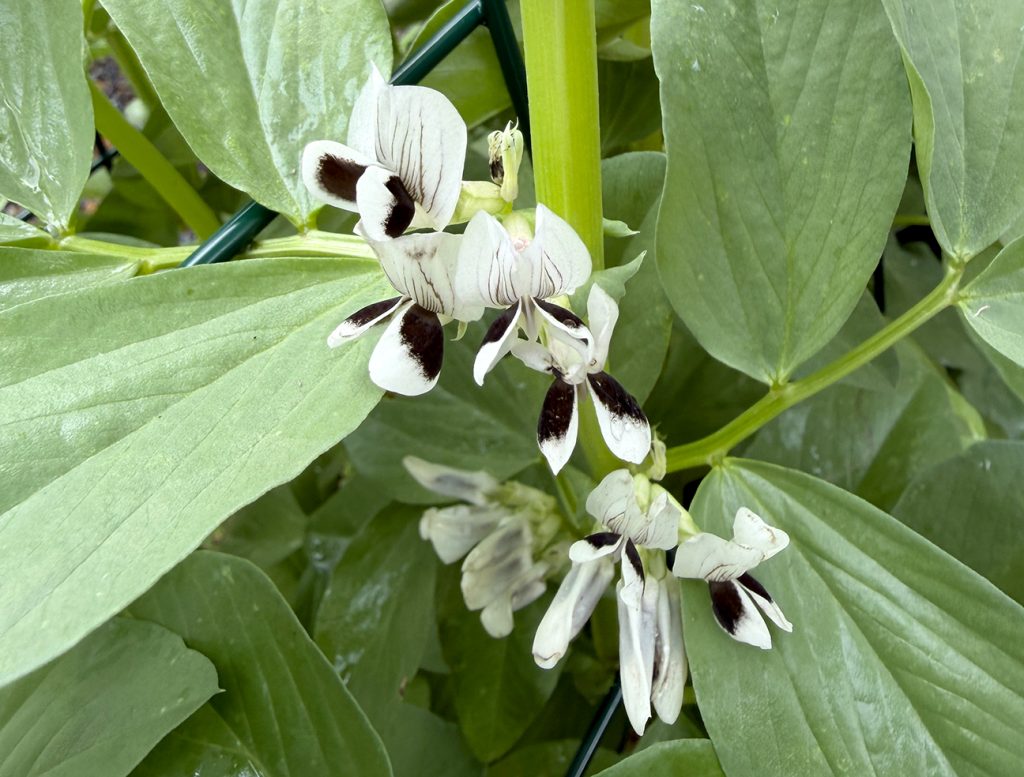
- Water consistently during flowering and pod development. The flowers are quite stunning. They resemble small gladiolas and are white and black. Plus, they are early flowers in the garden that attract pollinators.
- When daytime temperatures begin reaching the 80s, pinch or cut off the growing tips. This encourages the plants to direct their energy into filling the pods rather than producing more flowers.
- Harvest when the bright green pods feel plump and the beans inside have filled out the pods.
Processing Fava Beans
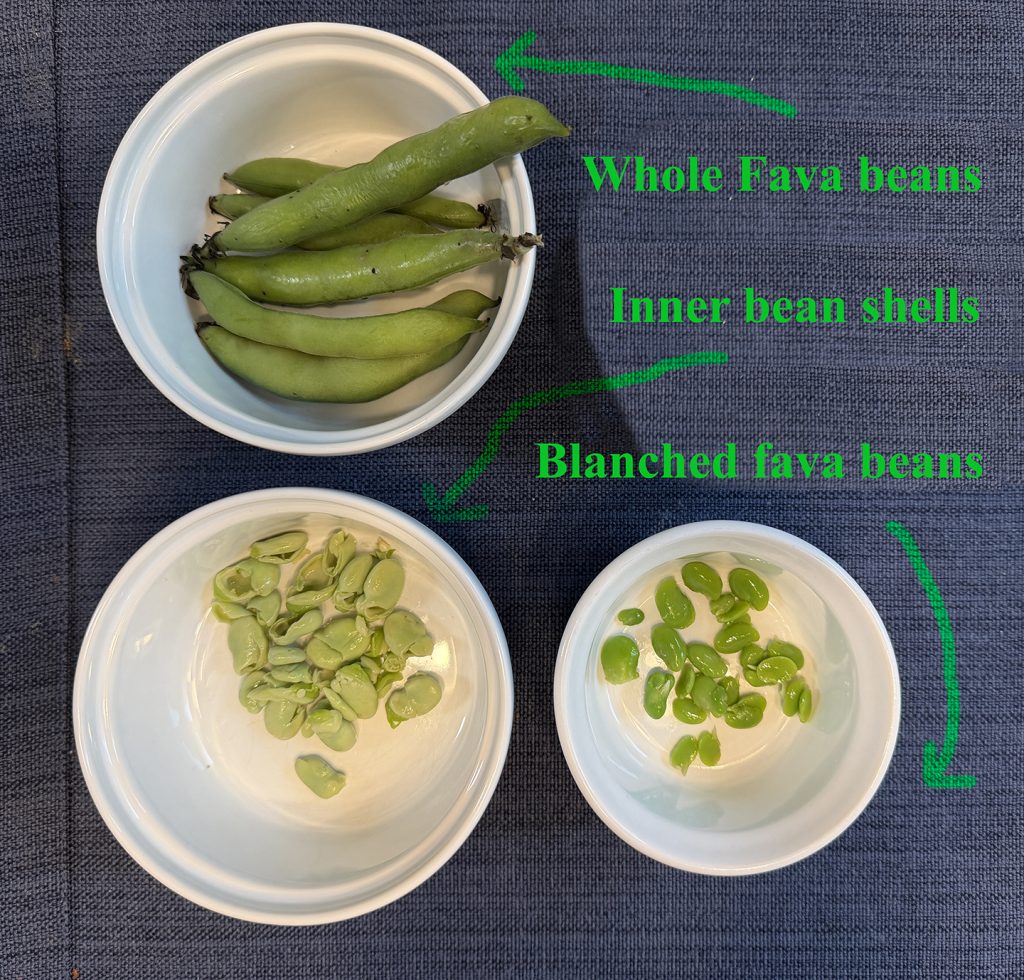
Interestingly, my favorite way to eat peas is straight from the garden. Their sweet crunch tastes like candy. Fava beans, however, are less tender and have that extra skin around each bean, so I prefer to eat them after blanching.
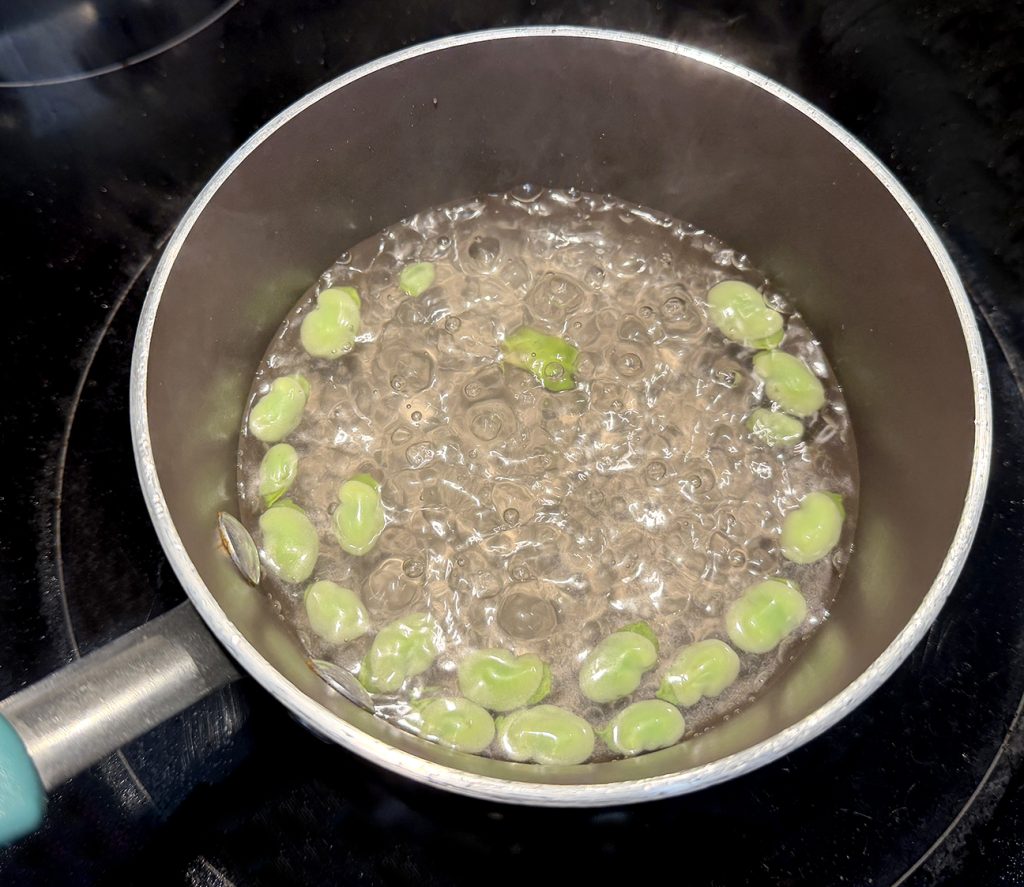
Here’s how I prepare them:
- Remove the beans from the outer pods.
- Bring a pot of water to a boil and blanch the beans for 1 minute.
- Immediately transfer them to an ice bath to stop the cooking. Don’t be alarmed if the cooking water turns pink—this is a harmless chemical reaction that naturally occurs with fava beans. (Link to blanching post here.)
- Pinch the top of the thin skin surrounding each bean and gently squeeze from the opposite end until the bright green bean pops out. (sort of like popping a zit!)
Yields are relatively low after shelling. Several pounds of pods produce only a cup or two of peeled beans. It’s a little time-consuming, but the rich, creamy flavor is worth every minute.
Why Fava Beans Are Good for You—and Your Garden
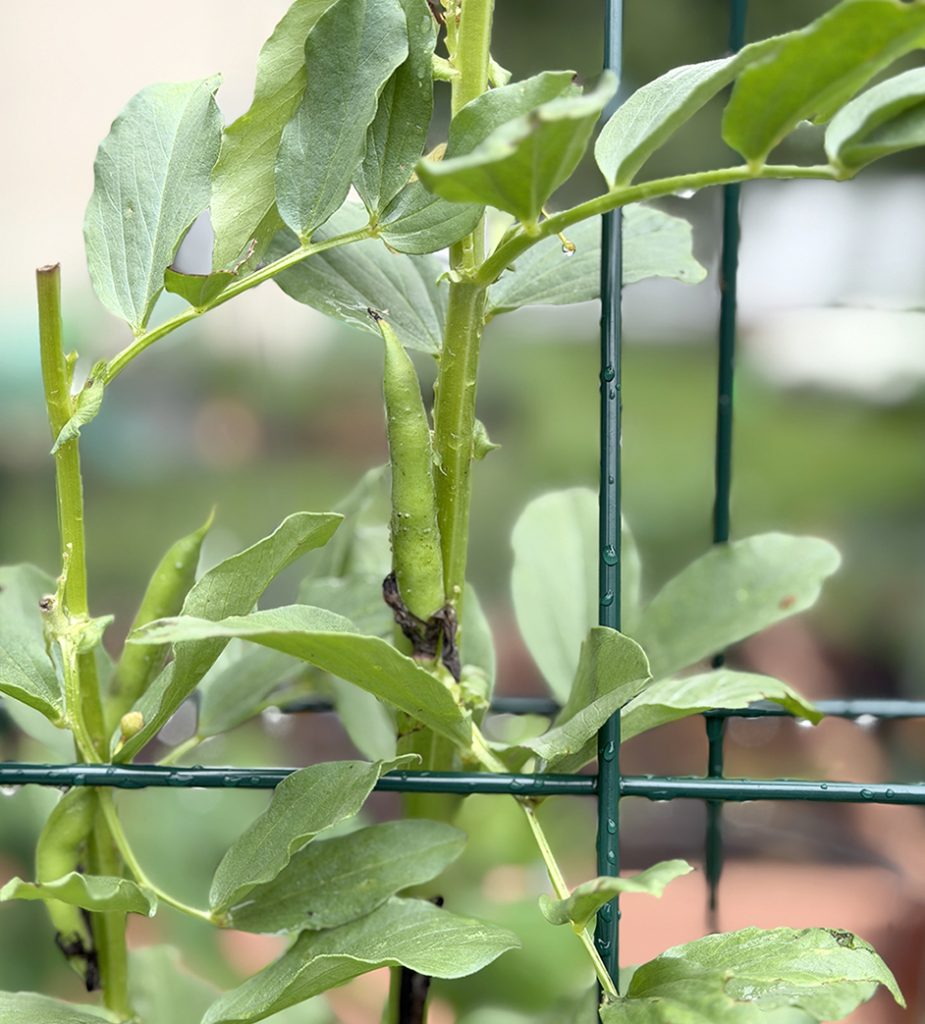
Like most legumes, fava beans improve your garden by fixing nitrogen in the soil through beneficial bacteria that live on their roots. After harvesting, cut the plants off at ground level and leave the roots in the soil so they can continue enriching the garden for future crops.
Nutritionally, fava beans are often considered a superfood. They are an excellent source of plant protein, fiber, folate, and several important minerals. As a complex carbohydrate, they also help provide steady energy and support healthy blood sugar levels.
Cautionary note: Favism
While they offer incredible health benefits, fava beans contain compounds that can trigger favism—a severe, life-threatening allergic reaction—in individuals with a specific, rare genetic enzyme deficiency (G6PD deficiency). This condition is rare, but worth pointing out to my readers. read more about this condition: Johns Hopkins
How to Eat Fresh Fava Beans
My harvest was small this year, so I didn’t have enough beans for the fresh fava hummus I had hoped to make. I’m adding it to next year’s garden-to-table list.
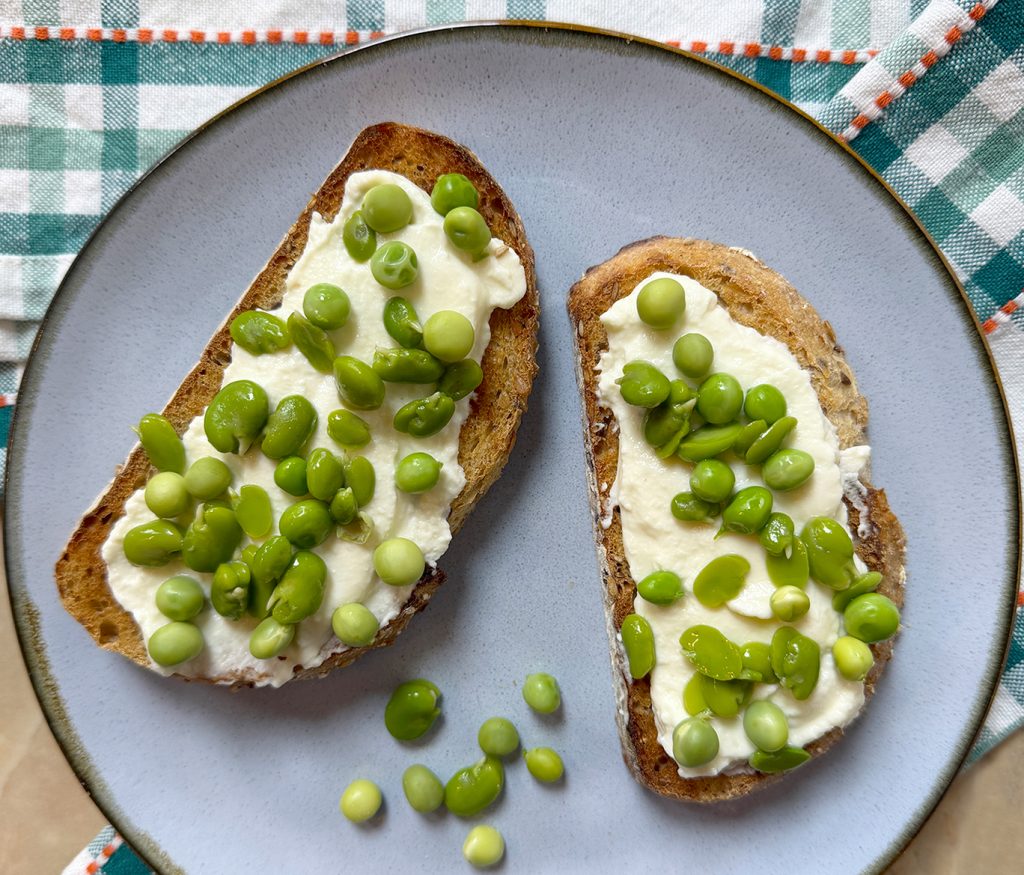
Instead, I made a delicious Fava Bean and Pea Ricotta Toast that was quite tasty and super easy to make.
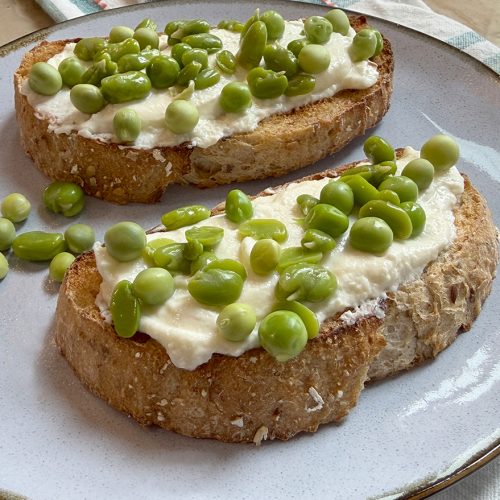
Fava Bean and Pea Ricotta Toast
Ingredients
- 4 slices Crusty bread
- 8 TBSP Whole milk Ricotta cheese
- 1/2 cup blanched and shelled fresh fava beans
- 1/2 cup shelled fresh peas
- 1/8 tsp salt for sprinkling
Instructions
- Toast the bread slices
- spread the ricotta on the cooled toasts
- sprinkle fava beans and peas evenly over the 4 toasts
- sprinkle with salt and serve
Since this is my first-year growing fava beans, I’d love to hear from readers. If you have a favorite way to prepare fresh fava beans, please share it in the comments—I always enjoy discovering new recipes!