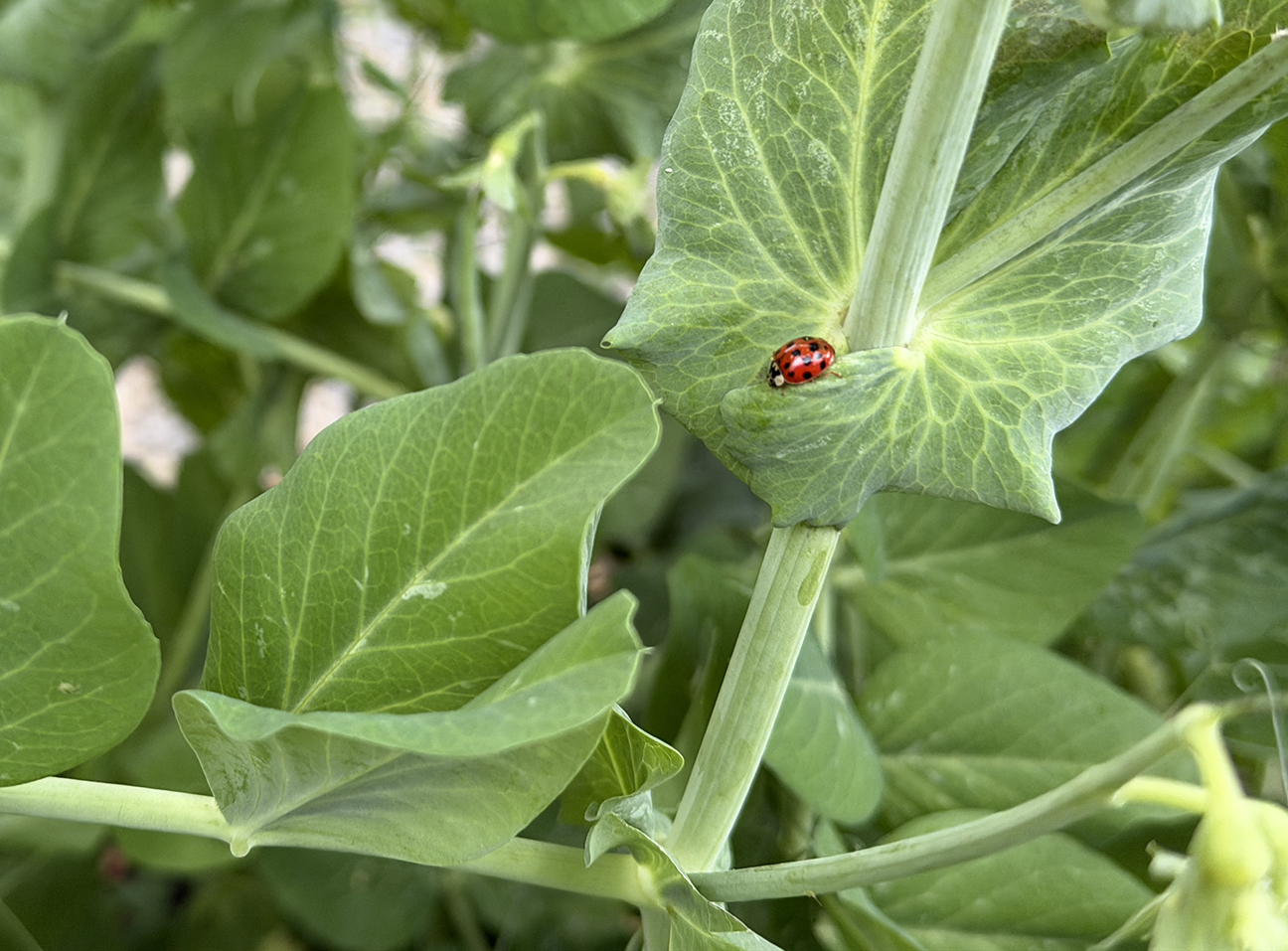
If you’ve ever had aphids seem to take over your garden overnight, you’re not alone. It happened to me this spring, and it caught me completely by surprise. In this post, I’ll share what happened, what worked (and what didn’t), and how I finally got my aphid infestation under control without using chemical pesticides.
The Perils of Extended Dry Weather
It was an unusually dry spring here in my area. My early spring vegetables were thriving despite the lack of rain because I watered them every day with a hose.
Over the years, I’ve learned to water plants at the base rather than overhead. Keeping the foliage dry helps prevent diseases like powdery mildew and leaf rot. Unfortunately, this watering method also contributed to a population explosion of aphids. Spraying plants with water helps knock aphids off the leaves before they have a chance to multiply.
Aphids thrive during hot, dry weather. Dry conditions reduce the fungal diseases that naturally kill aphids, and without rainfall, they remain undisturbed on the plants.
One day, while searching for tiny pea pods, I noticed a few small green aphids crawling on my arms after brushing against the plants. It seemed odd, but I didn’t think much about it. Looking back, that was the first warning sign.
Another clue that you may have a growing aphid population is an increase in ants. Ants “farm” aphids because they feed on the sweet honeydew the insects produce. If you see ants climbing your plants, it’s worth taking a closer look for aphids.
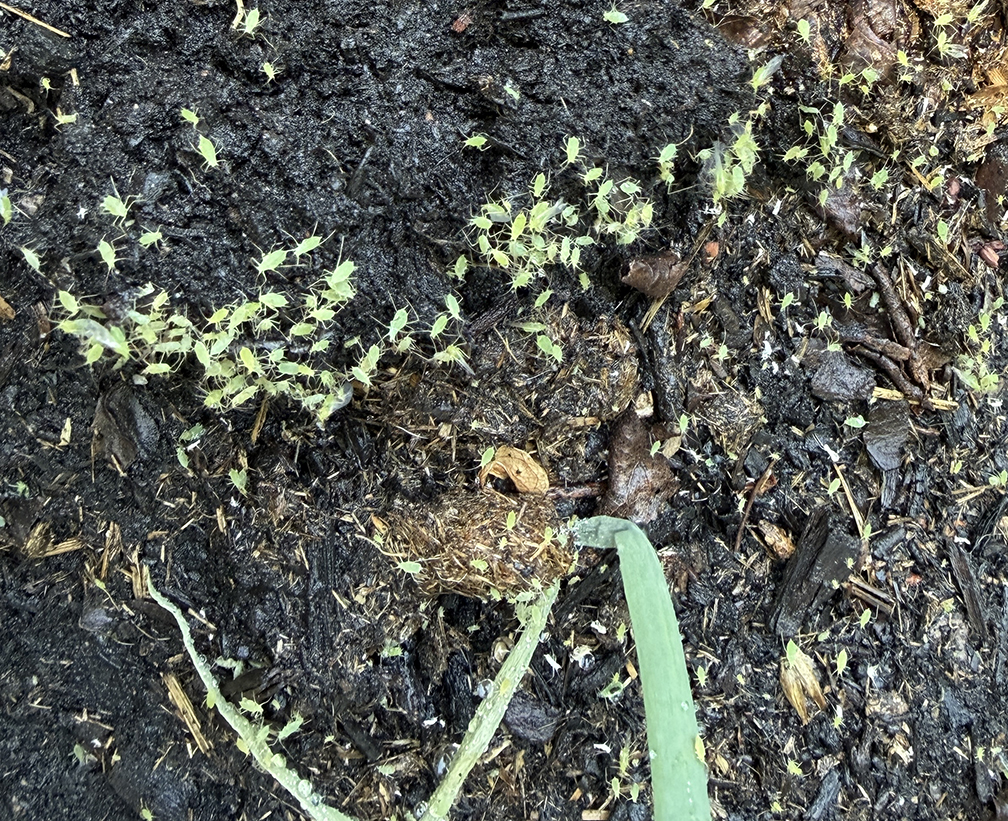
How Do Aphids Damage Plants?
Aphids damage plants by piercing the stems and leaves and sucking out the plant’s sap. As the infestation grows, the plants become weakened, resulting in curled leaves, stunted growth, and reduced harvests. Aphids can also spread plant viruses, making early detection and control especially important.
The Soapy Water Cure
A few days later, I lifted the leaves on my pea plants and discovered they were absolutely covered with aphids. There were hundreds of them feeding on the tender stems and leaves.
Most gardening experts recommend knocking aphids off the plants with a strong stream of water and then spraying the insects on the ground with a solution of soapy water to kill them. I followed this advice and repeated the process several times.
The treatment helped, but it wasn’t enough. The aphid population remained strong, and I knew I needed another solution.
Ladybugs to the Rescue
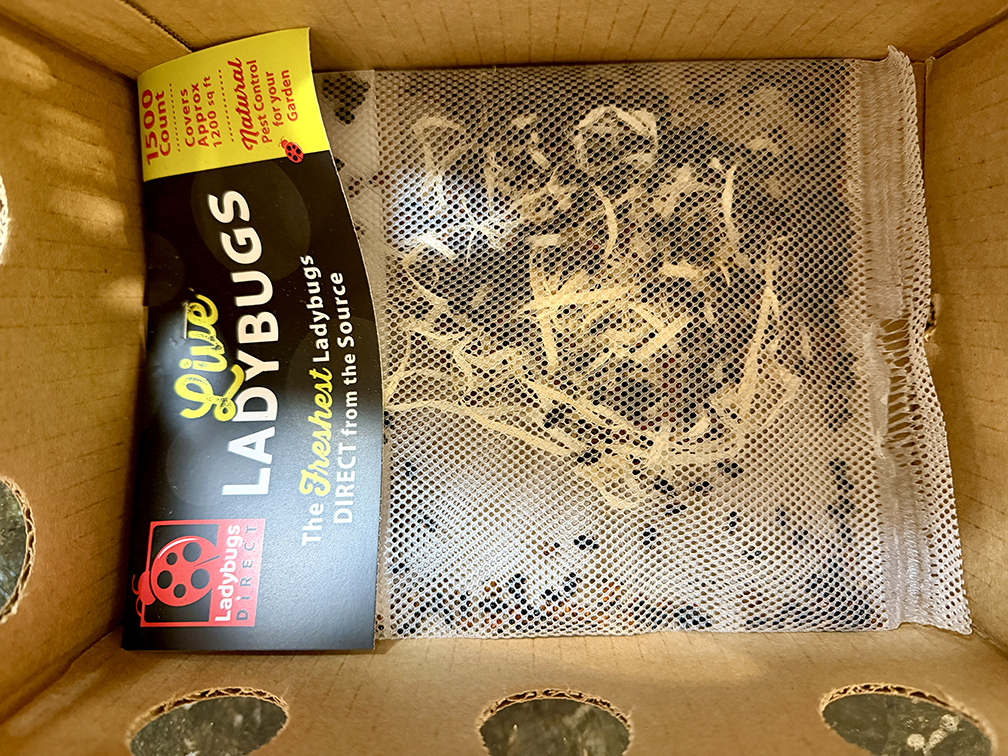
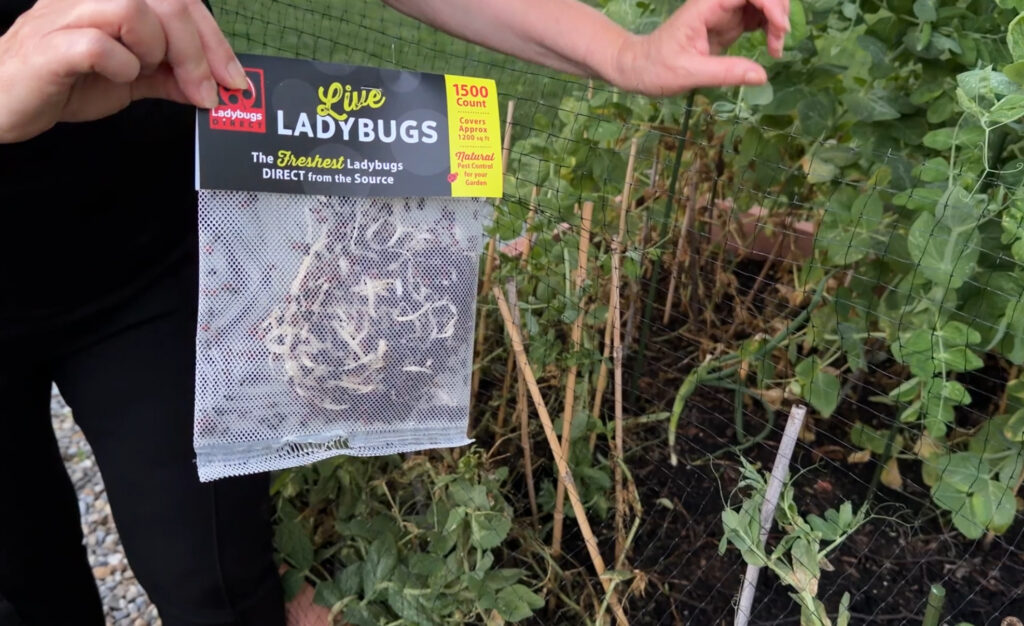
A photography client who shares my passion for organic gardening suggested a different approach. She recommended purchasing live ladybugs.
Ladybugs are one of nature’s best aphid predators. In fact, aphids are one of their favorite foods, making ladybugs an excellent natural form of pest control.
I was skeptical that you could actually order live ladybugs through the mail, but after doing some research, I decided to give it a try.
Where to purchase live ladybugs: https://www.ladybugsdirect.com/
Storing Live Ladybugs
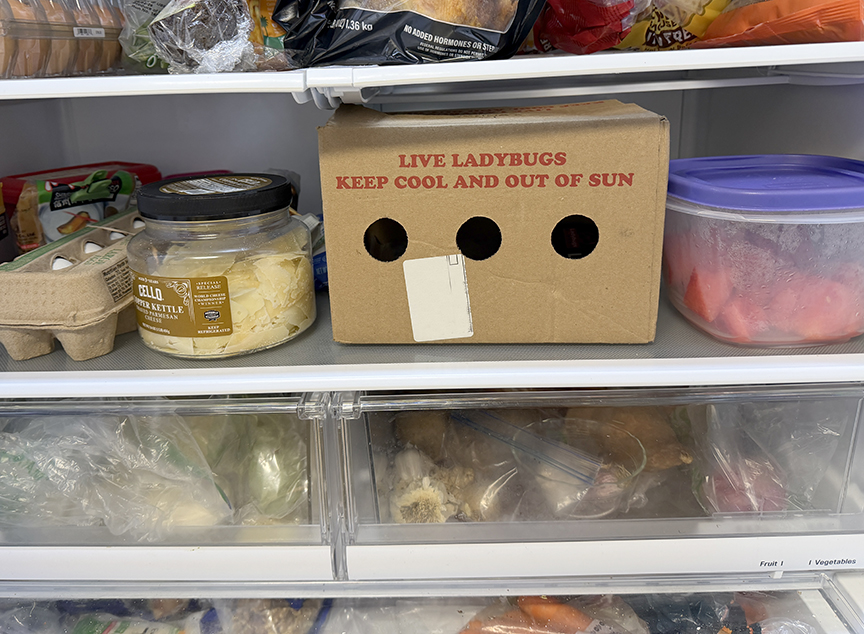
When your ladybugs arrive, keep them in the refrigerator until you’re ready to release them. The cool temperature keeps them dormant and prevents them from becoming active before you’re ready.
It’s best to release them as soon as possible after they arrive.
Tips for Releasing Ladybugs
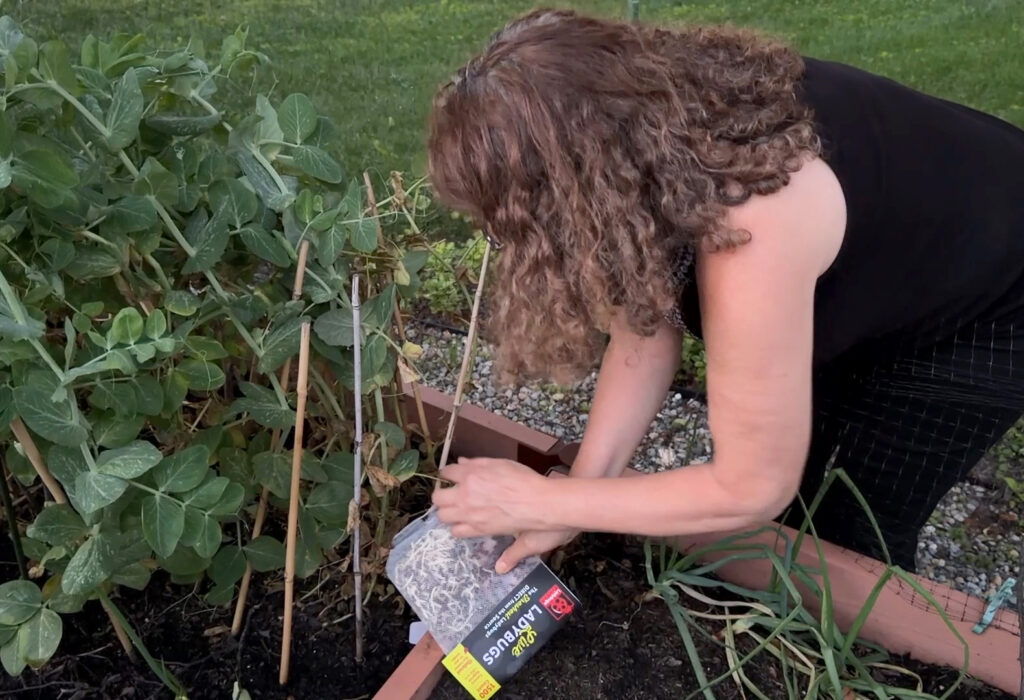
The best time to release ladybugs is just after dusk. Cooler evening temperatures encourage them to settle into your garden rather than immediately flying away.
If possible, release only a portion of the ladybugs each evening over several days. This helps establish a larger population in your garden.
I happened to be leaving town, so I released all of mine in one evening. Instead of dumping them in one location, I spread them throughout the areas where aphids were most active.
If the ladybugs find plenty of food, they may stay long enough to lay eggs. Their larvae actually eat even more aphids than the adults, providing you with a second generation of natural pest control.
Quick Tips
- Release ladybugs after dusk.
- Keep them refrigerated until you’re ready to use them.
- Cut a small corner of the bag and gently shake out a few at a time.
- Place small groups at the base of each affected plant.
- Release them near areas with plenty of aphids so they’ll have an immediate food source.
The Peas Were Saved!
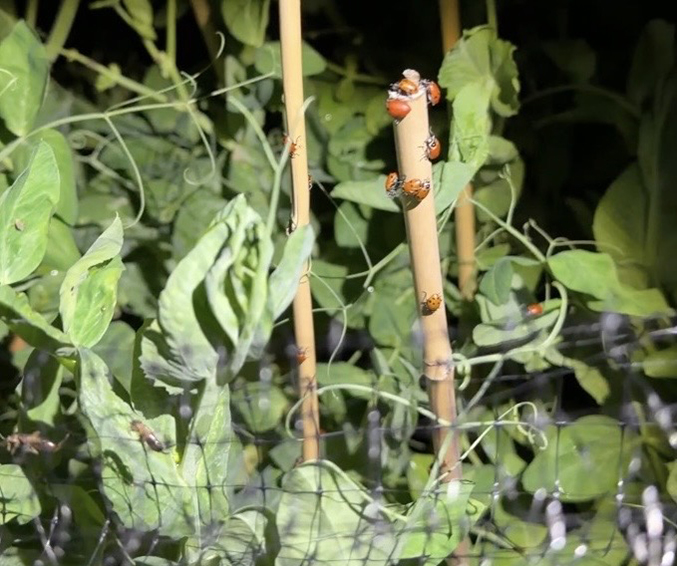
Thanks to the combination of soapy water sprays and the release of ladybugs, my pea crop—and several nearby vegetables—were saved. Within days, I noticed fewer aphids, and before long the infestation was under control.
I harvested a good crop of peas, and the rest of the garden continued to thrive without the use of chemical insecticides, which can harm beneficial insects as well as contaminate the food you harvest from the garden.
Long live the ladybugs!
Comments ( 2 )