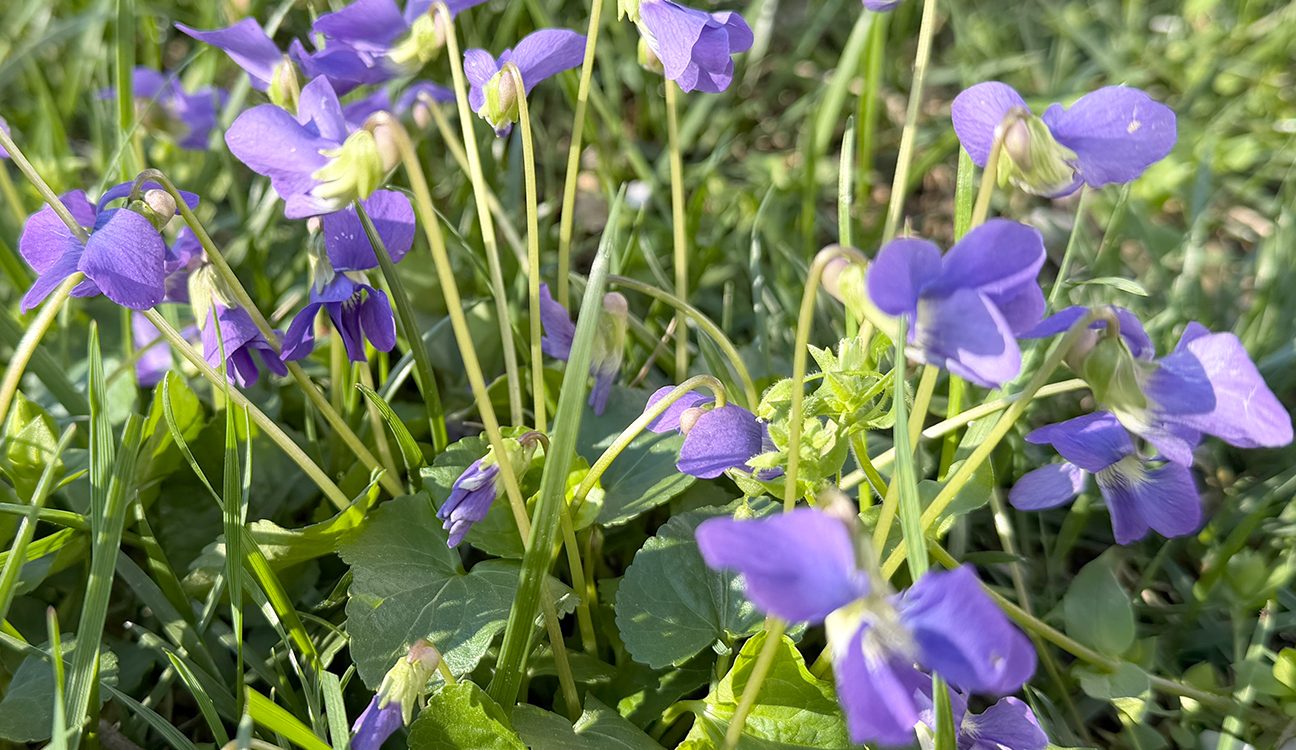
Wild violets in the lawn
Wild Violets: Identification, Uses, and Garden Value
Sometimes we overlook—or simply don’t notice—the value of certain things until someone else points out what we’re missing. That happened to me recently when my daughter and her partner were visiting on a spring afternoon. They commented on how beautiful the small purple flowers were in my backyard.
I responded by asking what they were talking about, since no flowers were blooming yet. They pointed to my straggly lawn, which was interspersed with a “weed” that had tiny purple flowers and heart‑shaped leaves. I quickly corrected them: Those are weeds, not flowers.
And so began my education on the value of weeds.
My daughter identified the plants as wild violets. She explained that not only are the flowers edible, but the leaves are as well—and that they even have medicinal benefits. In that moment, I learned a valuable lesson about looking for worth and beauty in the most unexpected places.
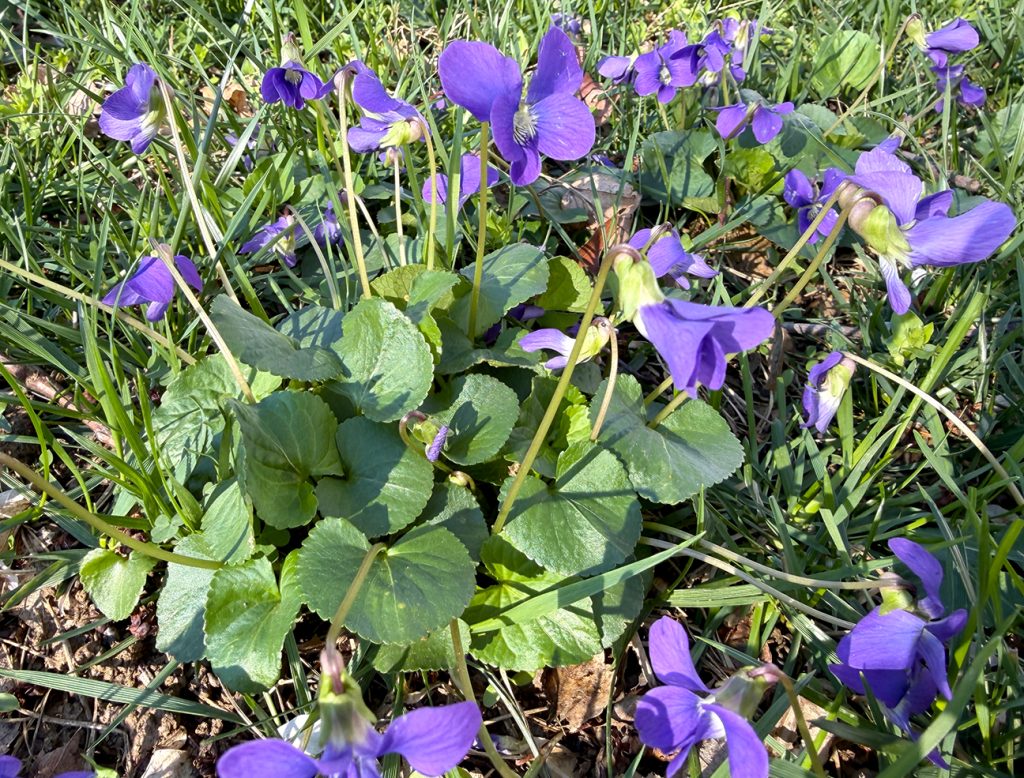
Is Wild Violet a weed
A weed is defined as a plant growing where it is not wanted. Usually, it’s considered a nuisance because it takes up space meant for more desirable or beneficial plants. Most weeds are highly adaptable, reproduce quickly, and can be difficult to eliminate. They grow aggressively and may become invasive.
Some weeds are hazardous—poisonous or prickly—and many are seen as aesthetically unappealing. In lawn care terms, any plant that prevents grass from forming a uniform “coat” of lawn is considered a weed.
Key Characteristics of Wild Violets
- Identification: Typically, 3–10 inches tall, with dark green, heart‑shaped leaves that have scalloped edges. The flowers are small and have five petals and may be white, yellow, or deep purple.
- Habitat & Spread: Wild violets thrive in four‑season climates. They prefer shady, damp spots but can tolerate sun as well. They spread through seeds and tough underground rhizomes. They usually flower in spring and may bloom again when cooler weather returns in the fall.
- Ground Cover: Although often labeled a weed, wild violets are sometimes used intentionally as ground cover. Their heart‑shaped leaves and colorful flowers create a pleasing, natural look. As native plants, they do especially well in shady areas where grass struggles.
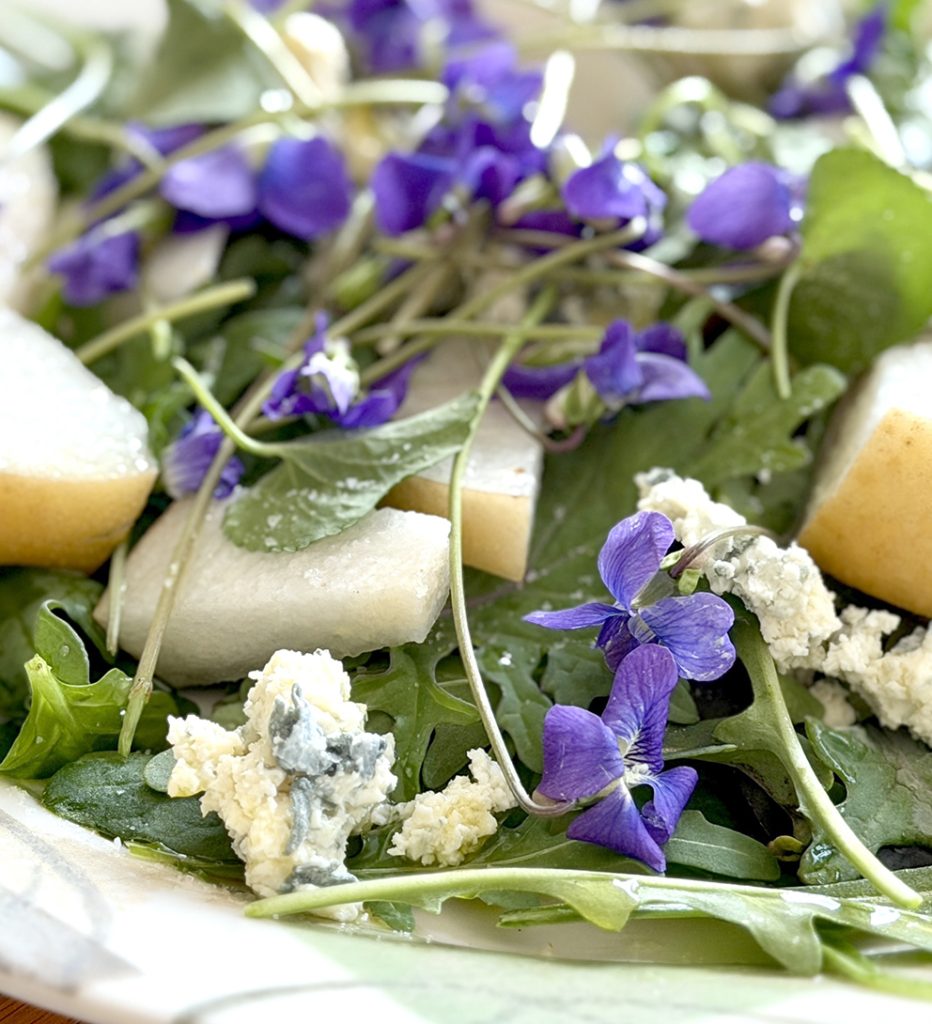
Edible Uses
Both the flowers and leaves of wild violets are edible and high in vitamins A and C. They can be added to salads or used as a colorful topping on toast. The flowers can also be candied.
Wild violets are very perishable, so it’s best to harvest only what you plan to use that day. While mild in flavor, they add beauty and visual interest to dishes. As with any foraged food, be sure to harvest violets only from areas free of animal waste, herbicides and pesticides.
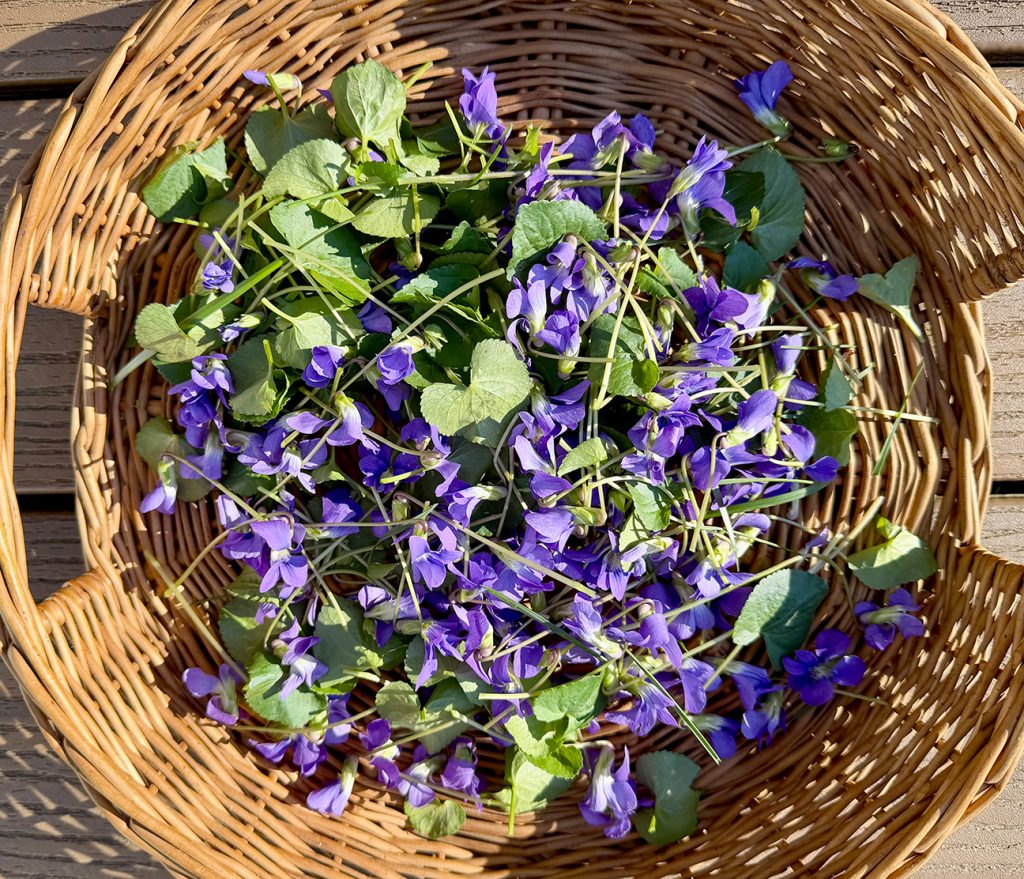
Post to learn more about other edible flowers
Growing Edible Flowers – EdibleGardenGirl
Medicinal Use
Historically, wild violets have been used by Indigenous peoples to help with coughs, colds, and muscle soreness. They are sometimes added to tea for these purposes.
Action Plan
The takeaway is simple: take a closer look at what’s growing naturally in your yard. Try to identify everything. You might discover a new edible treat—or realize you have something potentially harmful, like poison ivy or pokeweed, that you hadn’t noticed before.
This awareness is especially important if you have children or pets. Be curious. Be safe. And enjoy the outdoors.