
A little history about Meyer Lemons
Americans have been buying and eating lemons for centuries now. What we know as the regular lemon in the US are the varieties called Lisbon and Eurika lemons and are used interchangeably. These lemon trees were brought here from Portugal and Italy in the mid 1800’s. Sometime in the early 1900’s, an employee for the USDA named Frank Meyer went on an agricultural expedition to bring back new varieties of fruits and vegetables from other countries to the US. One of his great successes was the introduction of the Meyer lemon tree from China. It is a cross between a mandarin orange and a local Asian lemon tree.

Visual Differences: Color and shape of lemons
One can tell right away the difference in appearance between the regular American lemon and the Meyer lemon. Regular grocery store lemons are a vibrant lemon color, while Meyer lemons have a distinctive yellow/orange shade of rind. The inside flesh of each lemon carries through these differences as well. Typically, the Meyer lemon is smaller in size than a regular lemon, but not always. Its shape is rounder than the regular lemon and lacks the protruding nipple on the end. The surface of the skin on the Meyer lemon is much smoother than the regular lemon. Lastly, the rind and pith of the Meyer lemon is much thinner than its familiar counterpart.

Flavor of Meyer lemons
For consumption purposes, the main difference between the regular lemon and the Meyer lemon is the taste. Regular lemons are very acidic and tart. Meyer lemons have a fruitier, sweeter flavor. They work well in dessert recipes that require the signature lemon taste without the harsh bitterness. Their thin rind and pith make them ideal ingredients for candied lemon rinds but not as good as the regular lemon for zesting. Even the flowers are edible and used for decoration and flavoring ice cream and jams.
Perishability of Meyer lemons
The smooth, thin skin of the Meyer lemon has made the mass distribution of the fruit difficult. Since rising in popularity from celebrity cooks beginning in the 1960’s, the Meyer lemon’s unique attributes have been relegated to the backyard gardeners. As boutique farming has gained favor, specialty farms have propagated Meyer lemons in small groves in the warmer US states. You can now purchase the lemons at Whole Foods, Wegmans, and other stores in the winter months when the outdoor trees are harvested.
Grow your own Meyer lemon tree
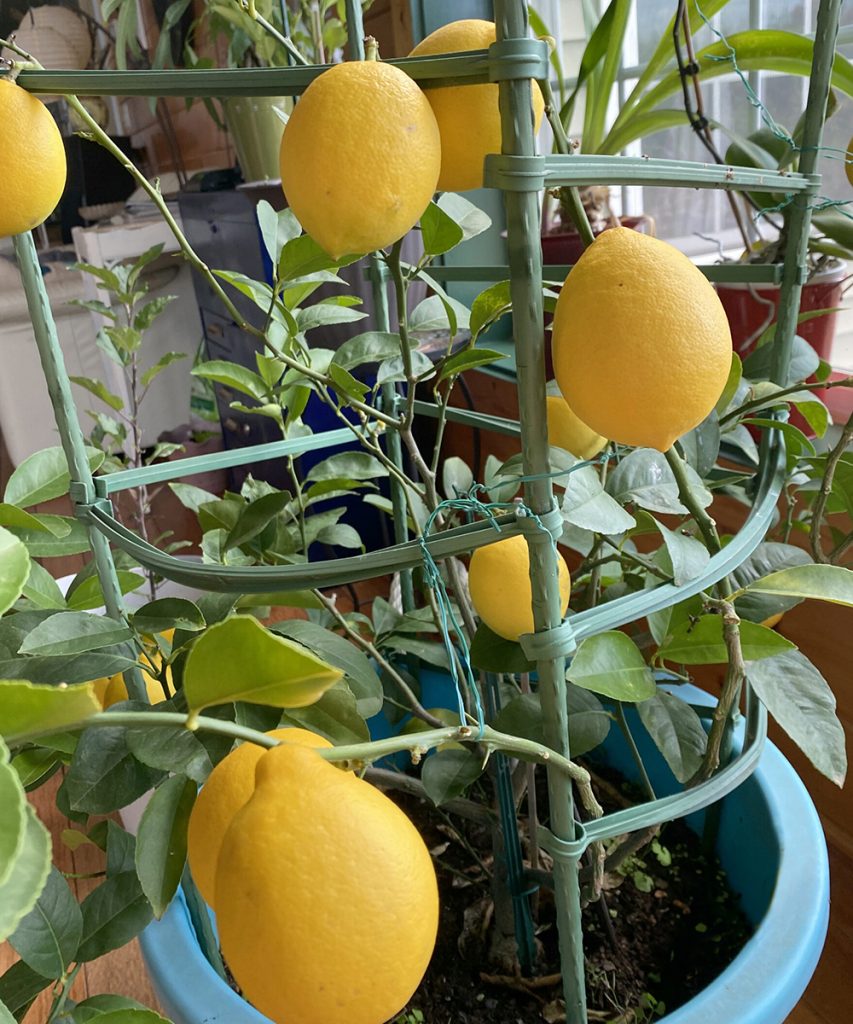
One of the best ways to ensure access to this special fruit is to grow your own trees. See my EdibleGardenGirl post about Keys to growing lemons in Maryland
For a more in-depth growing guide, check out this post
How To Grow An Indoor Lemon Tree from Mars-hydro.com
Comments ( 2 )